Whether you are pruning orchard branches, clearing fallen timber after a heavy monsoon storm, or cutting firewood on your agricultural estate, having the right chainsaw is essential. However, the performance of your saw does not just depend on its engine size-it is heavily influenced by the length of the guide bar. Choosing the correct size with a proper chainsaw bar length guide ensures safety, efficiency, and longevity for your equipment.
In this guide, we break down how guide bar lengths are measured, match bar sizes to typical farm tasks, and discuss how to keep your cutting assembly in top shape.
Key Takeaways
- Engine Match is Critical: A guide bar that is too long for your chainsaw’s engine CC leads to engine strain, high wear, and slow cutting.
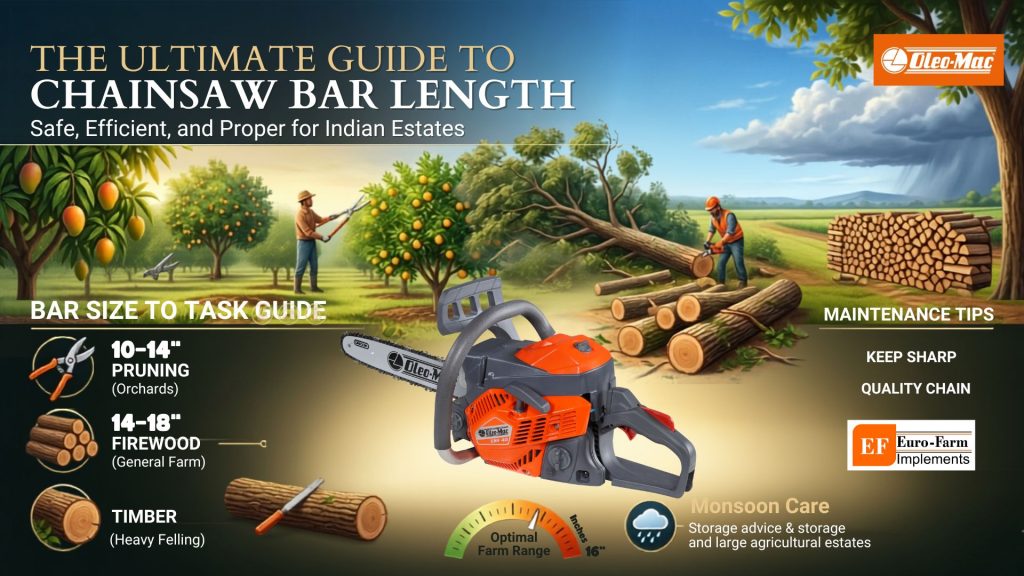
- Optimal Farm Range: For most Indian farm and orchard applications, a bar length between 14 to 18 inches offers the best balance of power, weight, and reach.
- Safety & Kickback: Shorter bars are easier to control, reducing the risk of kickback-the leading cause of chainsaw accidents.
- Proper Chain Maintenance: A sharp, well-tensioned chain and high-quality bar lubricant are crucial to extending the life of your guide bar.
Understanding Guide Bar Length: What is It?
A chainsaw’s guide bar is the elongated steel plate that guides and supports the cutting chain. When people talk about bar length, they are referring to the usable cutting length (also known as the “called length”), which is the distance from the front tip of the saw’s body to the furthest point on the nose of the bar. It is not the total length of the bar from end to end.
For safe operations, the guide bar should be at least 2 inches longer than the thickness of the wood you intend to cut in a single pass. For example, a 16-inch bar can comfortably cut through a 14-inch log in one sweep. To explore the basic mechanics and components of chainsaws, check out the Wikipedia Chainsaw Guide.
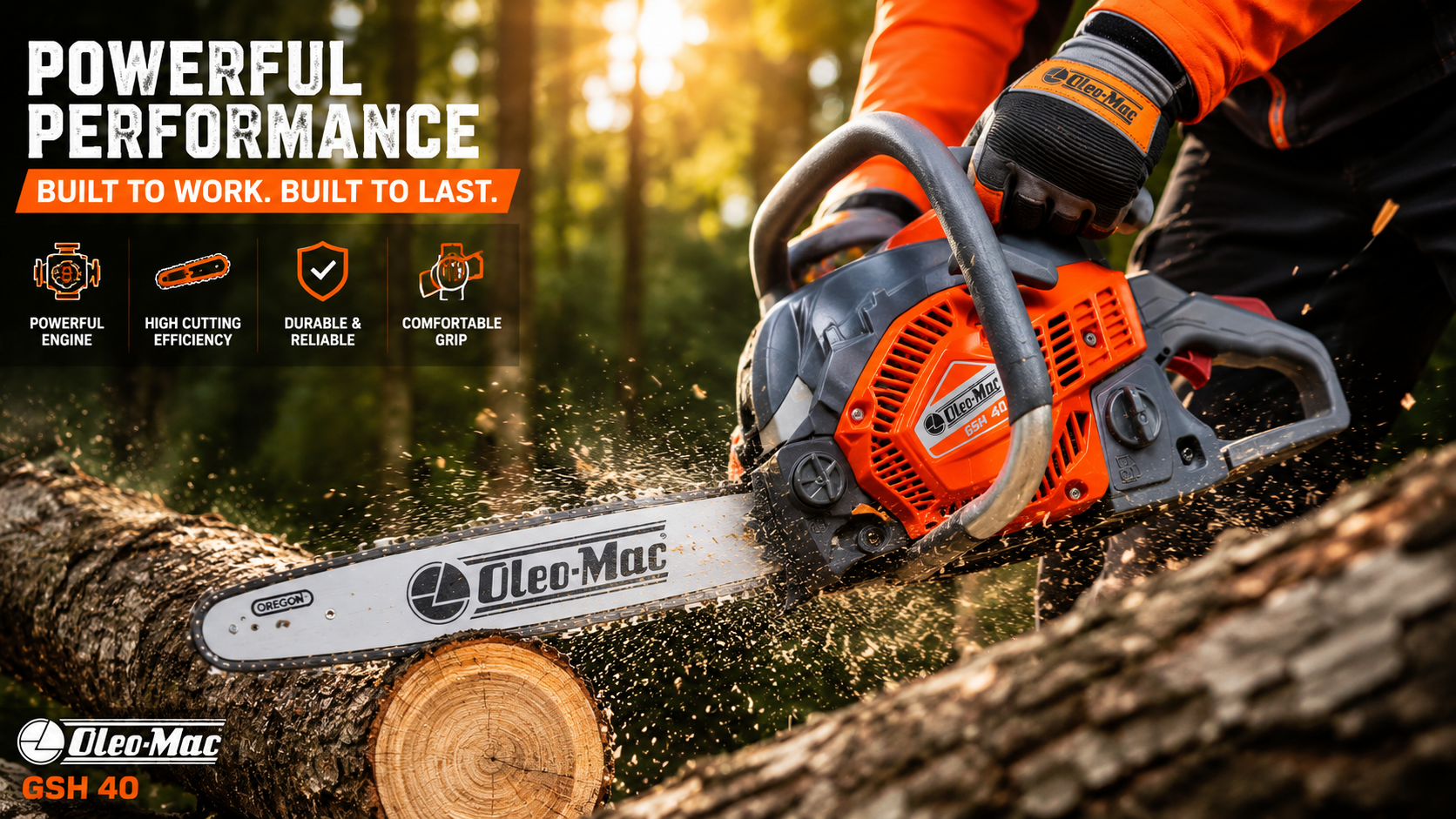
Choosing a well-balanced chainsaw guide bar reduces operator fatigue and improves cutting speed.
Chainsaw Bar Length Guide for Typical Farm Tasks
When selecting a bar size for your agricultural estate, you must match the length to the specific tasks you perform most frequently:
1. Pruning and Light Trimming (10 to 14 Inches)
Ideal for fruit tree orchards (like mango, citrus, or coconut estates). Shorter bars are lightweight, highly maneuverable, and draw less power from the engine. This makes them perfect for overhead work and tight pruning spaces.
2. Firewood Cutting and General Maintenance (14 to 18 Inches)
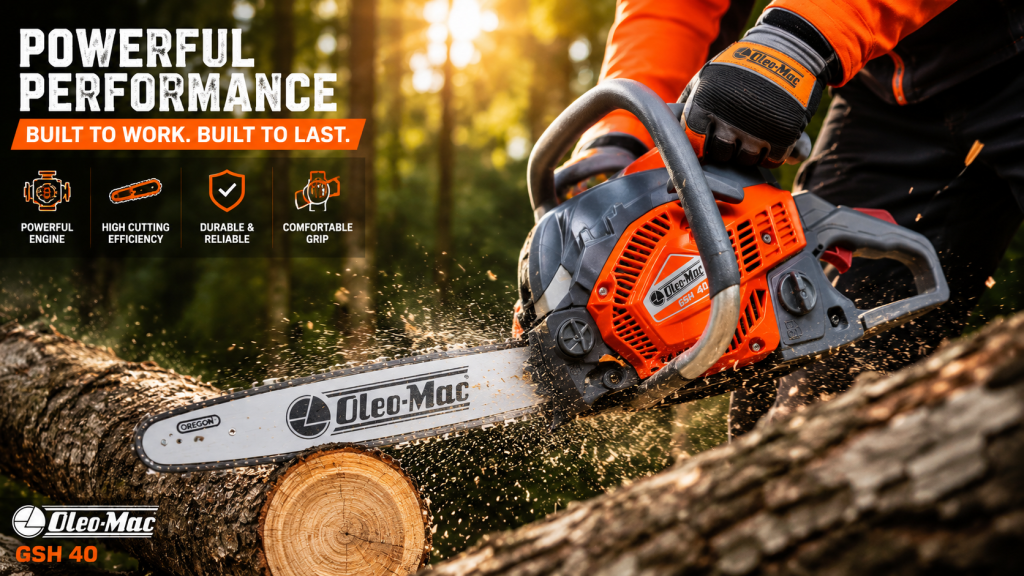
This is the standard range for farm work. An 16-inch or 18-inch bar is versatile enough to clean up fallen logs, fell medium-sized trees, and prepare firewood. A saw like the Oleo-Mac GSH 40 (often paired with a 16-inch bar) is a prime example of an excellent farm-use model.
3. Heavy Felling and Timber Clearing (20 Inches and Above)
Only recommended for heavy forestry operations or clearing very thick hardwood trees. These bars require high-displacement professional engines (50cc+) to pull the chain through the wood without stalling.
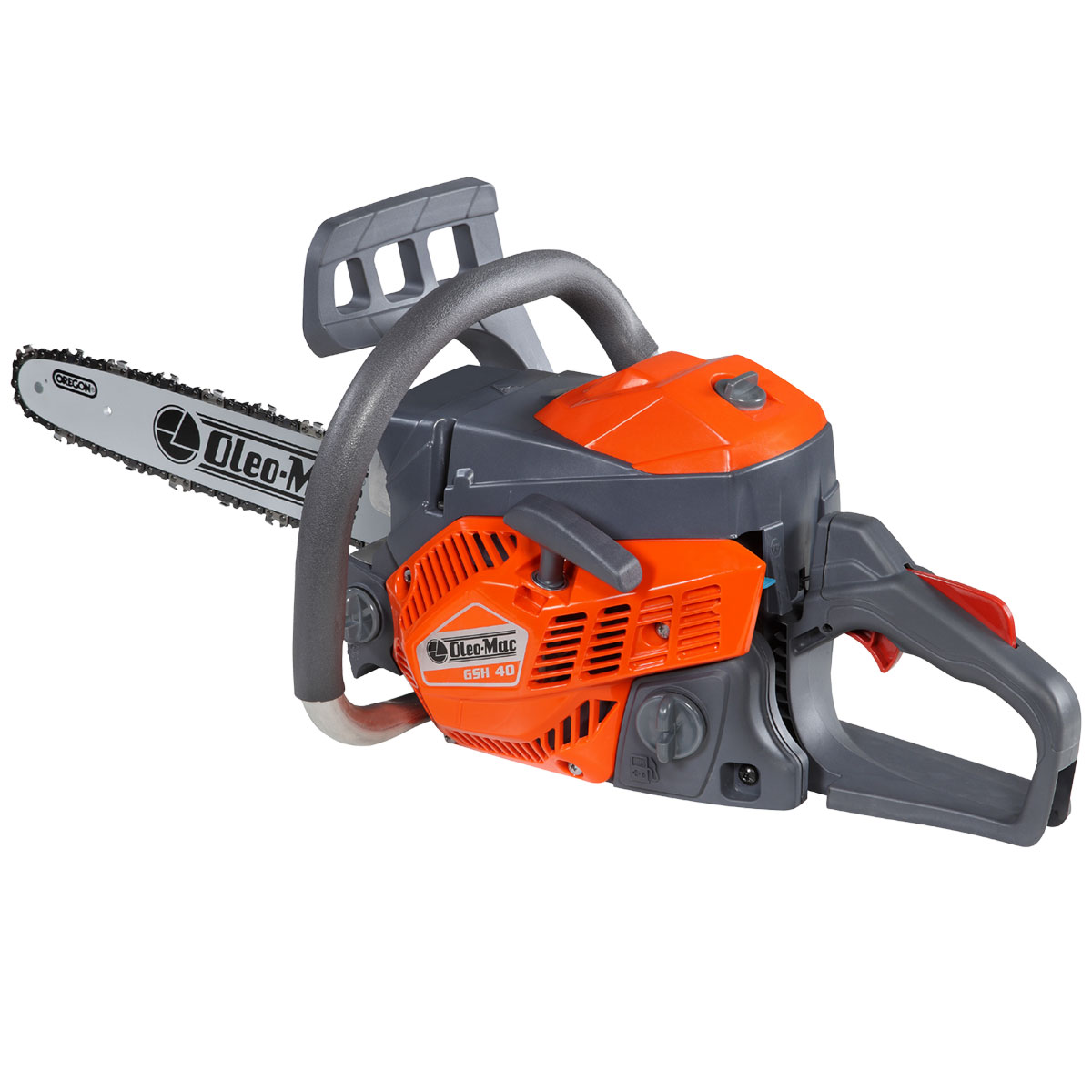
The Oleo-Mac GSH 40 is a versatile, high-torque petrol chainsaw ideal for general farm chores.
Maintenance Tips to Extend Guide Bar & Chain Life
A guide bar is subject to high friction and heat. To prevent premature wear, binding, and dangerous kickbacks, follow these essential maintenance practices:
- Keep the Chain Sharp: A dull chain forces the operator to push down on the saw, which overheats the guide bar and wears out the rails. Use a dedicated kit like the Oleo-Mac Chainsaw Sharpening File Set to keep cutters sharp.
- Use Quality Saw Chains: Ensure you replace worn chains with high-quality options like the Oleo-Mac Saw Chain to maintain smooth cutting dynamics.
- Lubricate Generously: Always use proper bar and chain oil. Ensure your engine fuel is mixed with a premium lubricant like Oleo-Mac Special 2T Oil for optimal motor protection.
- Monsoon Care: Rust is a major threat during the rainy season. Learn the best storage methods in our guide on how to store and maintain a petrol chainsaw during the Indian monsoon season.
FAQ Section
What is the most versatile chainsaw bar length for a farm?
The most versatile chainsaw bar length for farm and estate use is 16 inches. It provides enough reach to cut through medium-sized logs (up to 14 inches in a single pass) while remaining light enough for pruning and limbing branches without causing excessive operator fatigue.
Can I put a longer bar on my small chainsaw?
No, you should never exceed the manufacturer’s maximum recommended bar length for your specific chainsaw model. A bar that is too long increases load on the engine, causes the clutch to slip, speeds up wear on the oiler, and poses a severe safety hazard due to reduced control.
How do I know if my chainsaw bar needs to be replaced?
Your chainsaw guide bar needs replacement if you notice uneven wear on the rails (causing the saw to cut at an angle), a bent bar body, deep grooving along the chain path, or if the nose sprocket is damaged and no longer rotates freely.