
Managing overgrowth, dense weeds, and wild vegetation is one of the most demanding tasks on Indian farms, orchards, and commercial estates. When standard lawnmowers reach their limit against woody stalks and thick undergrowth, a professional petrol brush cutter is the ultimate tool to restore order. Equipped with high-torque engines and heavy-duty metal blades or nylon heads, these machines are built to tackle the most demanding clearing operations.
In this comprehensive guide, we cover everything you need to know about choosing the right brush cutter engine size, selecting key accessories, and troubleshooting common starting issues to keep your estate running smoothly.
Key Takeaways
- High-Torque Performance: Petrol brush cutters offer the mobility and raw cutting power required to clear dense monsoonal weeds and woody brush.
- Right Engine Size Matters: Choosing the correct engine capacity (CC) ensures you have enough power without carrying unnecessary weight.
- Essential Consumables: Utilizing high-performance components like professional-grade trimmer lines ensures cleaner cuts and longer tool life.
- Simple Maintenance Saves Money: Most starting failures can be resolved on-site with basic troubleshooting steps.
Choosing the Right Engine CC for Your Brush Cutter
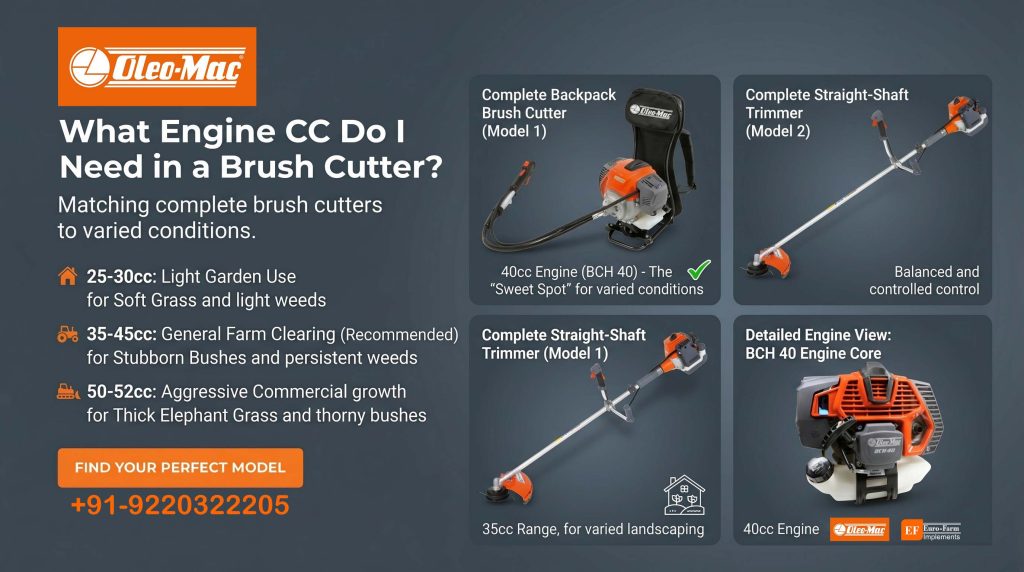
One of the most critical decisions when purchasing a brush cutter is selecting the appropriate engine displacement. Underpowered machines will bog down in heavy weeds, leading to clutch wear, while oversized engines add unnecessary weight and fatigue during long working hours.
Here is a general guide to selecting engine sizes for Indian agricultural conditions:
- 25cc to 35cc (Light Duty): Best for lawn edging, soft weeds, and light maintenance around garden beds.
- 40cc to 50cc (Medium to Heavy Duty): The sweet spot for clearing thick monsoonal weeds, dense wild grass, and light woody shrubs on commercial farms.
- Above 50cc (Professional/Forestry Duty): Designed for heavy clearing operations, saplings, and dense undergrowth.
For an in-depth breakdown of engine sizing and power requirements, read our expert analysis on what engine CC is needed in a brush cutter to clear thick Indian weeds.
Enhancing Cutting Performance with Premium Consumables
A brush cutter is only as good as its cutting head. While metal blades are necessary for woody brush, a nylon trimmer line is the preferred choice for cutting around walls, fences, and rocky areas where metal blades might suffer impact damage.
For professional landscaping, standard round nylon lines wear out quickly against tough weeds. Upgrading to a premium, structural option like the Oleo-Mac Trimmer Line SP66 PRO significantly reduces breakage, increases cutting efficiency, and saves refueling downtime. You can read more about various cutting tool designs in the Wikipedia Brushcutter Guide.

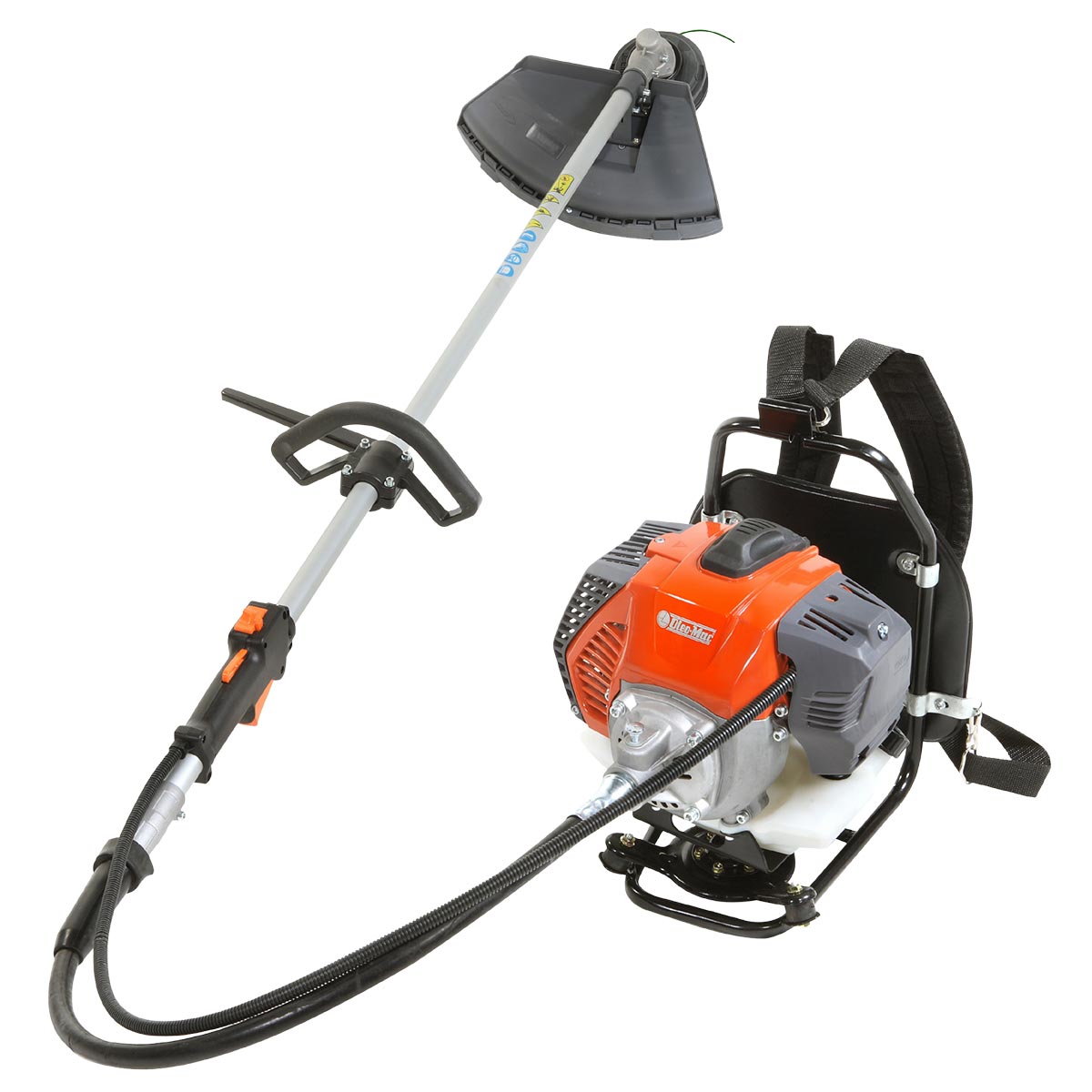
Professional petrol brush cutters feature ergonomic harnesses and handles to distribute weight during long shifts.
Troubleshooting: What to Do When Your Brush Cutter Won’t Start
It can be highly frustrating when you are ready to start your workday and your equipment refuses to fire up. Fortunately, most starting issues on petrol-powered 2-stroke engines are caused by simple factors like stale fuel, clogged filters, or a fouled spark plug.
Before calling an off-site mechanic or transporting the machine to a service center, you can perform these basic field checks:
- Check the Fuel Quality and Ratio: Verify that you are using a fresh petrol-to-oil mixture at the manufacturer’s recommended ratio with high-quality 2-stroke engine oil.
- Inspect the Spark Plug: Remove the plug to see if it is wet with fuel (flooded engine) or covered in carbon deposits. Clean or replace it if necessary.
- Examine the Air Filter: A choked air filter restricts airflow, preventing the engine from starting or causing it to run poorly.
For step-by-step instructions on diagnosing these common issues at the farm, review our comprehensive troubleshooting guide: Why Won’t My Brush Cutter Start? 5 Fixes You Can Do at the Farm.
FAQ Section
What fuel mix ratio should I use for a petrol brush cutter?
Most petrol brush cutters utilize a 2-stroke engine which requires petrol to be pre-mixed with high-quality 2-stroke oil. The standard mix ratio is usually 50:1 (2%) or 40:1 (2.5%) depending on the manufacturer’s instructions. Always use clean, fresh petrol to prevent carburetor damage.
Can a brush cutter cut through woody brush and saplings?
Yes, but you must replace the nylon trimmer head with a heavy-duty metal blade, such as a 3-tooth or 40-tooth circular saw blade. Ensure your brush cutter has an engine capacity of at least 40cc to handle the load of cutting woody vegetation safely.
Why does my brush cutter start but die when I give it throttle?
This issue is typically caused by a clogged carburetor jet or a dirty fuel filter, which restricts fuel flow when the engine demands more power. It can also occur if the engine is running too lean due to improper carburetor adjustment screws.